
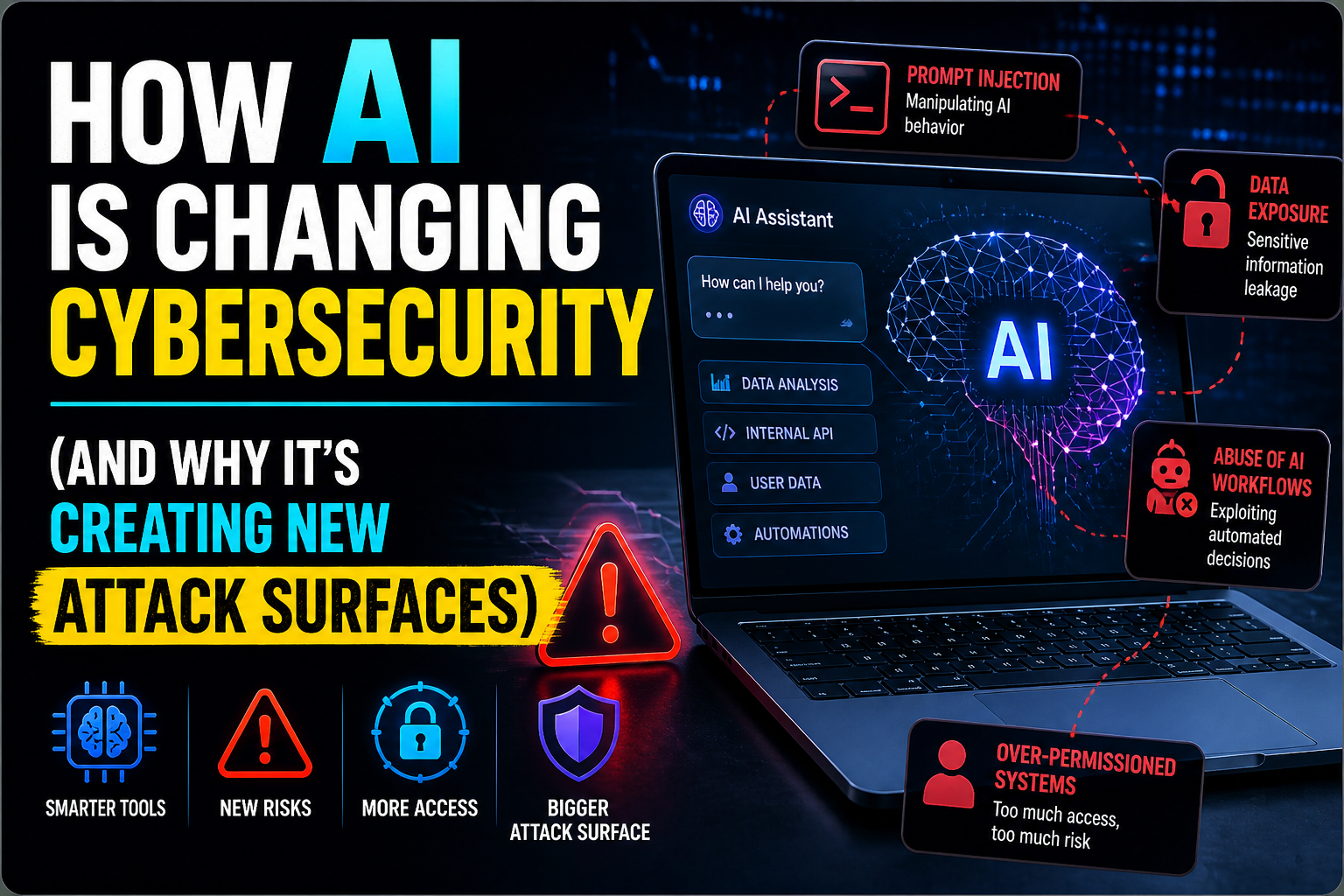
Artificial intelligence is quickly becoming a core part of modern applications. From chatbots and recommendation systems to internal automation tools and AI-powered workflows, SaaS platforms are integrating AI at an increasing pace.
But while AI is improving efficiency and user experience, it is also introducing something most teams are not fully prepared for. New attack surfaces.
The problem is not that AI is insecure by default. The problem is that it changes how systems behave, how data flows, and how decisions are made. And in doing so, it creates entirely new ways for attackers to interact with applications.
AI Is Expanding the Attack Surface
In traditional applications, the attack surface is relatively predictable. You have endpoints, authentication systems, APIs, and business logic. Security testing focuses on how these components behave under different conditions. AI changes this model.
Now you have systems that:
- Process untrusted input in dynamic ways
- Generate responses based on context
- Interact with external tools and data sources
- Make decisions without strict, predefined logic
This creates a layer of unpredictability that attackers can exploit. Instead of targeting fixed endpoints, attackers can now influence how the system thinks and responds.
Prompt Injection and Indirect Input Manipulation
One of the most common emerging issues is prompt injection. In simple terms, attackers manipulate the input given to an AI system in order to change its behavior.
For example, if an AI assistant is designed to retrieve and summarize internal data, an attacker may craft input that forces the model to expose information it should not reveal.
This becomes more dangerous when AI systems are connected to:
- Internal APIs
- Databases
- External integrations
Because now the AI is not just responding — it is acting.
Over-Permissioned AI Systems
Many AI integrations are given broad access to systems to make them useful.
This includes:
- Access to user data
- API permissions
- Internal tools
- Automation capabilities
If these permissions are not tightly controlled, the AI becomes a high-value target.
An attacker who can influence or abuse the AI system may be able to:
- Access sensitive data
- Trigger unintended actions
- Escalate privileges
This is similar to traditional access control issues, but amplified by automation.
Data Leakage Through AI Responses
AI systems often generate responses based on training data, context, or connected sources.
If not handled properly, this can lead to:
- Exposure of sensitive information
- Leakage of internal data
- Unintended disclosure of system behavior
The risk is not always obvious, because the system appears to be functioning correctly. But under certain inputs, it may reveal more than intended.
Business Logic Abuse Through AI Workflows
AI does not just process data — it often participates in workflows.
For example:
- Approving requests
- Automating tasks
- Generating outputs used by other systems
This introduces a new layer of business logic risk.
Attackers can:
- Manipulate inputs to bypass controls
- Influence automated decisions
- Trigger workflows in unintended ways
These are not traditional vulnerabilities, but they can have real business impact.
Why Traditional Security Testing Falls Short
Most security testing approaches are not designed for AI-driven systems.
Automated scanners cannot:
- Understand prompt behavior
- Evaluate AI decision-making
- Detect indirect manipulation
- Identify logic abuse in AI workflows
Even traditional penetration testing needs to adapt.
Testing AI systems requires:
- Understanding how the model interacts with inputs
- Evaluating integrations and permissions
- Simulating real misuse scenarios
What This Means for SaaS Security
For SaaS platforms, this shift is significant. AI is not just another feature. It becomes part of the core application logic.
Which means:
- It must be treated as part of the attack surface
- It must be tested like any other critical component
- It must be controlled and monitored carefully
Ignoring this layer can introduce risks that are difficult to detect and even harder to fix later.
Final Thoughts
AI is changing cybersecurity, but not just by improving defenses. It is also creating new opportunities for attackers. The systems are more dynamic, more connected, and more powerful — which makes them more valuable targets.
Understanding how AI can be abused is now just as important as understanding traditional vulnerabilities.
Because the question is no longer just: “Is the system secure?”
It is: “How can this system be influenced, manipulated, or misused?”
Need Help Testing AI-Driven Systems?
If your application integrates AI, APIs, or automated workflows, it’s important to understand how these systems behave under real-world conditions.
At The Hidden Finds, the focus is on practical security testing across modern application environments — including APIs, authentication systems, business logic, and emerging AI-driven workflows.
If you want to identify real risks before they turn into incidents, reach out with details about your platform and we’ll help you assess what actually matters.