
Introduction
Most SaaS companies believe they are secure. They rely on cloud infrastructure, managed services, and modern frameworks. On the surface, everything looks solid. But in reality, most breaches today don’t come from complex exploits or zero-days.
They happen because of something much simpler:
Access. Trust. And broken logic. In many cases, attackers don’t “hack” the system — they log in, move through APIs, and abuse what already exists. And it happens faster than most teams expect.
The Shift: How Modern SaaS Attacks Work
Traditional security thinking focuses on:
- Server vulnerabilities
- Outdated software
- Known exploits
But modern SaaS attacks look very different.
Attackers now operate by:
- Using valid credentials
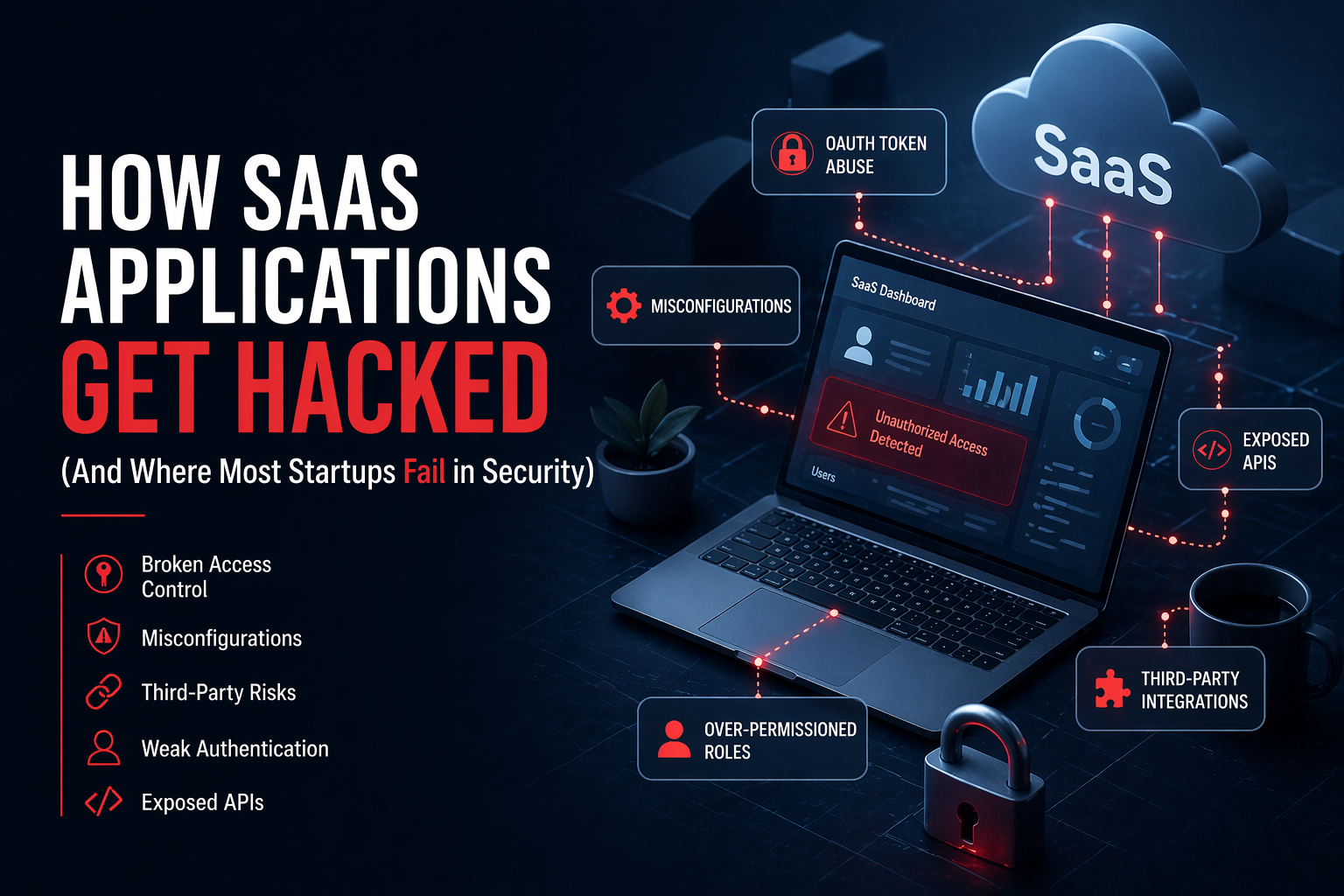
- Abusing OAuth tokens and API access
- Exploiting misconfigurations and permissions
This approach is often called “living off the cloud.”
Meaning attackers don’t need malware — they use your system as intended, just in ways you didn’t expect.
How SaaS Applications Actually Get Hacked
Let’s break down the most common real-world attack paths.
OAuth Tokens and API Access Abuse
Modern applications rely heavily on integrations:
- Google OAuth
- Slack apps
- GitHub access
- Third-party tools
Once access is granted, it often persists silently. Even if the password is changed or the user logs out, the token can still remain valid. Attackers exploit this through consent phishing, malicious integrations, and stolen API keys.
Credential-Based Attacks (Account Takeover)
This is still one of the easiest entry points.
Attackers use:
- Credential stuffing
- Password spraying
- Reused passwords from previous breaches
If there is no MFA or proper rate limiting, access is gained quickly. Once inside, the real attack begins.
Security Misconfigurations
This is where most SaaS platforms fail quietly.
Examples include:
- “Anyone with the link” access
- Public storage buckets
- Overly permissive roles
- Exposed internal endpoints
These are not traditional vulnerabilities. They are design mistakes. Attackers actively look for them.
Third-Party and Supply Chain Access
Your system is only as secure as what you connect to it.
Modern SaaS applications depend on:
- Plugins
- APIs
- External tools
- CI/CD pipelines
If one of these is compromised, the attacker inherits trust.
This is how many real-world breaches escalate.
What Attackers Actually Do
Most people imagine hacking as exploiting servers and gaining shell access.
But in SaaS environments, it looks very different:
- Gain access through credentials or tokens
- Explore APIs and endpoints
- Identify weak authorization logic
- Move across accounts or data
- Extract sensitive information
There is no complex exploit. No malware required. Just understanding how the system works better than the people who built it.
Where Most Startups Fail
This is where the real problem lies.
Over-Permissioned Access
Many systems default to admin-level roles or broad permissions instead of enforcing least privilege.
This turns a small compromise into a full system breach.
Broken Tenant Isolation
In multi-tenant environments, weak authorization logic can allow one user to access another user’s data.
This is one of the most critical and commonly exploited issues in SaaS platforms.
Ignoring Non-Human Identities
Most teams focus on securing user logins but ignore:
- API keys
- Service accounts
- OAuth tokens
These often become long-term access points for attackers.
Temporary Fixes That Become Permanent
Common examples include:
- Admin panels exposed for testing
- Debug endpoints left accessible
- Permissions relaxed temporarily
These are often forgotten and left open, creating easy entry points.
Lack of Asset Visibility
You cannot secure what you do not know exists.
Untracked APIs, subdomains, and integrations create hidden attack surfaces that are rarely monitored.
Why Most Security Approaches Fail
Many teams rely on:
- Automated scanners
- Compliance checklists
- Basic vulnerability assessments
These approaches often miss:
- Business logic flaws
- Authorization issues
- Real exploit paths
Because they do not test like attackers.
What This Means for Your Application
If your platform includes:
- Login systems
- APIs
- User roles
- Integrations
Then these risks already exist. The real question is not whether your system is vulnerable. It is where it is vulnerable — and who finds it first.
Where to Go From Here
Most SaaS security issues are not about complexity. They are about visibility, access control, and real-world testing.
If you want to better understand how these risks apply to your platform, you should look into:
- API security testing
- Penetration testing focused on real scenarios
- Improving asset visibility across your environment
Final Thought
SaaS security does not break in obvious ways.
It bends in places most teams do not look.
And attackers know exactly where to push.